
Habemos muchos que cometemos errores: common mistakes that we native speakers make.
should of done something different… Ich habe dich nicht angerufen, weil (lange Pause) ich wollte dich nicht stören… La voiture que j'ai lavé était très sale.Yes, native speakers of all languages make mistakes when speaking our native language. In this article, we'll look at frequent mistakes that we native Spanish speakers make when speaking our own language. Let's go!
Dequeísmo.
This is the incorrect use of the preposition de in constructions that don’t need it. It’s a very frequent mistake among native speakers.
Common cases of dequeísmo:
Subject of the sentence: De is never used if the subordinate clause acts as the subject. For example, it’s incorrect to say “Me alegra de que seas feliz”, the correct form is “Me alegra que seas feliz” (It makes me happy that you are happy). However, if the verb is pronominal (like “alegrarse”), it is correct and necessary to use de: “Me alegro de que seas feliz” (I’m happy that you are happy).
Direct object: It’s incorrect to add de before a subordinate clause that functions as a direct object, especially with verbs of thought, speech, fear, or perception. For example, you don’t say “Pienso de que ganaremos”, but rather “Pienso que ganaremos” (I think that we will win).
Attribute in copulative sentences: If the subordinate clause functions as an attribute with the verb “ser” (to be), it shouldn’t carry de. For example, it’s incorrect to say “Mi intención es de que participemos”, the correct form is “Mi intención es que participemos” (My intention is that we participate).
Habían muchas personas.
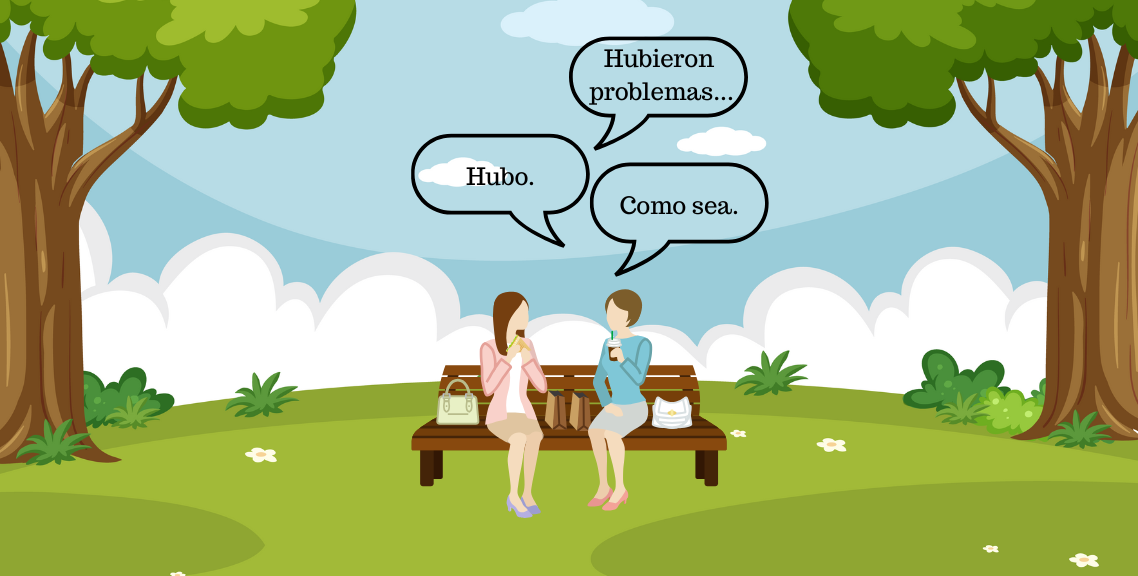
The use of the verb haber to indicate the existence of something is an impersonal use of this verb, therefore not conjugated with the grammatical subject. However, this use is the source of a very frequent error that we native Spanish speakers make. Not in the present indicative, but when we use other verb tenses and, specifically, the plural. Let’s see a couple of examples:
Hay un problema con la electricidad. (There is a problem with the electricity).
Hay problemas con la electricidad. (There are problems with the electricity).
Very frequently, when this construction is used in other verb tenses, in the case of the plural the verb is “conjugated”:
Hubo un problema con la electricidad. (There was a problem with the electricity).
Hubieron problemas con la electricidad (instead of hubo problemas con la electricidad). (There were problems with the electricity).
Había un problema con la electricidad. (There was a problem with the electricity). Habían problemas con la electricidad (instead of había problemas con la electricidad) (There were problems with the electricity).
Habrá un problema con la electricidad. (There will be a problem with the electricity). Habrán problemas con la electricidad (instead of habrá problemas con la electricidad). (There will be problems with the electricity).
That is, since this construction is an impersonal construction, the verb is not conjugated and its form is the same in singular and plural, regardless of the verb tense we use.
Subir para arriba.
This mistake, quite frequent, is a redundancy one: saying subir (to go up) implies that it’s upward, plus it’s impossible to go up downward.
Incorrect: Sube para arriba, por favor.
Correct: Sube, por favor (Go up, please).
Other examples, also frequent, are bajar para abajo (to go down downward), salir para afuera (to go out outward), and entrar para adentro (to go in inward). In all these cases, using the verb alone is sufficient and, moreover, correct.
Más mejor.
This is an expression that can be found frequently in spoken language, but it’s incorrect. Mejor (better) already implies comparison, so the use of más (more) in this case is incorrect. It’s also frequently seen with peor (worse) as más peor, and it’s also incorrect.
Incorrect example: El libro es más mejor que la película. Correct example: El libro es mejor que la película.
We’ve reached the end of the article. The mistakes seen here are not the only ones that we native Spanish speakers make, but they are among the most frequent. And beyond the fact that the idea of this blog is not to teach mistakes, I think it’s important to know the most frequent ones. On one hand because they are something we’ll encounter frequently in daily life and, on the other hand, because it’s important to be able to identify them. Thanks for reading!


Leave a Reply