
La guitarra se rompió: The Accidental Se in Spanish
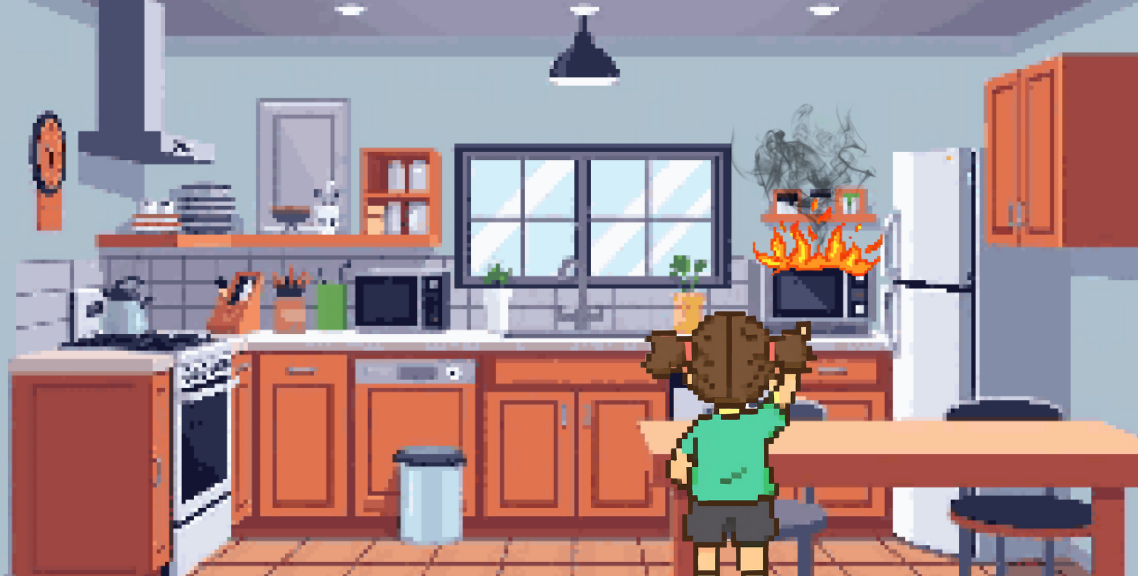
hings don't break on their own: someone or something breaks them. If a guitar is broken it's because a person, for example, smashed it against a wall, or because an anvil fell on it, or because the wood rotted and split, to give a few among many possible examples. But in Spanish it's possible to convey the idea that something happened "by itself" and no, it's not that if you learn the Spanish language magic comes included with it. In this article we'll look at a very frequently used construction in Spanish: the accidental se, which from a semantic point of view is used to exclude or minimize the agent of an action and focus on the result of the action, and also the dative of interest, (another) inheritance from Latin, which is used to indicate who was involved in the accidental event. With this dative, although we acknowledge having participated in what happened, pragmatically we present ourselves as "victims" of the situation rather than as directly responsible. Let's go!
Here you can read more about linguistic pragmatics. Broadly speaking, pragmatics studies the why of uttering a statement, the context and the intention. It’s at the base of why there are many ways to convey the same message when the logical thing, if we were robots, would be for there to be only one way to do it. And while all the resources we have in all current languages are the result of the historical evolution of languages, the use we give them depends, in many cases, on cultural factors. In Hispanic culture, and I repeat, when we talk about Hispanic culture we encompass thousands of cultures, but cultures that have things in common, by the grace of language :), being too direct when conveying a message sounds bad, sounds rude, so Spanish speakers have formulas to avoid being so direct. One of those formulas is the accidental se: through its use, let’s say, we distance ourselves from blame. Because Spanish speakers don’t like being direct even with ourselves.
In Spanish there are three voices: the active voice, in which the subject performs an action (yo cerré la puerta / I closed the door), a passive voice, which we’ll see in another article, and a middle voice, in which the process, the change of state, occurs “by itself”: la taza se rompió (the cup broke). That’s the construction we’ll look at in this article. Why do we use this construction? This construction is normally used in Spanish to convey messages about a negative or unpleasant fact in a less direct way: it’s not the same to say rompí tu taza (I broke your cup) as to say tu taza se rompió (your cup broke). And the reasons are pragmatic, cultural, that’s the way we Spanish speakers have of conveying this type of message.
Let’s look at a bit of history. In classical Latin there existed the passive voice: porta clauditur (la puerta es cerrada / the door is closed), marked by the suffix -tur. There also existed reflexive constructions: Marcus se videt (Marcos se ve a sí mismo / Marcus sees himself). During the evolution from vulgar Latin to Romance, for phonetic reasons and grammatical simplification, the suffix -tur fell into disuse in certain contexts, and the pronoun se from reflexive constructions began to be used to express processes that occur “by themselves”: la puerta se cierra (the door closes). From there evolved the middle voice of modern Spanish. But enough history! This Latin inheritance explains why today we can say se rompió la taza without mentioning who broke it.
Using the active voice, in yo rompí la guitarra (I broke the guitar), yo is the grammatical subject and la guitarra is the direct object of the verb romper. But using the accidental se, la guitarra becomes the subject of the sentence. The grammatical structure is simple: subject + se + verb in third person: la guitarra se rompió (the guitar broke). Of course, the order is flexible depending on what we want to emphasize: se + verb in third person + subject: se rompió la guitarra. In this case la guitarra is the grammatical subject, and the verb agrees with the subject in number: se rompieron las guitarras. The same happens if we use another verb tense: se ha roto la guitarra (the guitar has broken) in pretérito perfecto compuesto and singular, se habían roto las guitarras (the guitars had broken) in pretérito pluscuamperfecto and plural, and so on. Here you can read more about passive participles in Spanish, if you’re interested. What you should know about the use of this construction in Spanish is the following: its most normal use is, from a pragmatic point of view, to distance ourselves from blame, to express that something happened accidentally, regardless of who was involved. That’s why it’s normally used with verbs that convey negative messages: romperse (to break), quemarse (to burn), caerse (to fall), mancharse (to stain), etc.
Let’s look at a bit more history, because Latin gave us the possibility of including in this construction the person involved in the accidental event. As we saw before, in classical Latin porta clauditur meant la puerta es cerrada. Latin had pronouns in the dative case (mihi = para mí, a mí / for me, to me) that indicated the person affected or benefited by an action. When these elements were combined (constructions with se + dative), what we use today in Spanish emerged: se me cerró la puerta. To summarize: the se indicates the accidental nature of the event, and the pronoun that accompanies it (me, te, le, nos, os, les) is the dative, that is, it indicates the person involved or affected by what happened. These pronouns always maintain that order: first se, then the dative pronoun: se me rompió, se te cayó, se le olvidó, se nos perdió, se os quemó, se les estropeó. Using this construction we indicate the involvement of a person in the event, but in a more indirect way: it’s not the same to say quemé la comida (I burned the food) as to say se me quemó la comida. The word order, just as when we use this construction without the dative, is flexible for reasons of emphasis and, furthermore, to emphasize even more we can use stressed pronouns: la comida se me quemó a mí (and not someone else).
I hope this information has been useful to you. Here I leave you exercises to practice this topic, which is very frequently used in the language. If you have questions write to me or leave a comment and, as always, thanks for reading!

Leave a Reply