Communicative goal: personal introduction
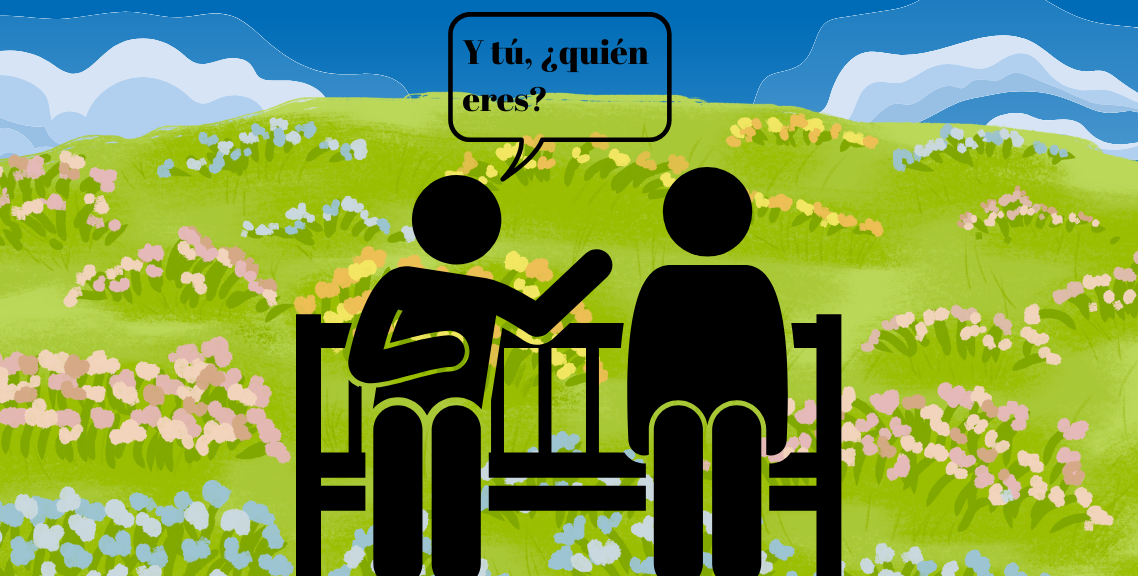
n this article we'll bring together the content we've covered in previous articles to consolidate the first communicative goal we generally have when learning a foreign language: introducing ourselves. Let's go!
To introduce ourselves in Spanish we need a set of resources we’ve covered in previous articles. In this paragraph I’ll list them and leave you links to those articles in case you want to dig deeper, because this particular article will be more practical: using those resources, I’m going to introduce myself as an example. And this personal introduction will be fairly basic: I’ll include my name, age, profession, nationality, and the languages I speak.
To give our name in Spanish we have two ways: saying mi nombre es… (my name is…) or, the most common one in spoken language, using the reflexive verb llamarse (to be called). It’s very important to learn this verb because it’s not only the most colloquial way to give our name, but also the most colloquial way to ask for someone else’s name. That is, when someone wants to know your name they’ll ask you ¿Cómo te llamas? You can also ask ¿Cuál es tu nombre? (What is your name?), but it’s less common in spoken language and, subjectively, it sounds more distant, colder, and in certain contexts could even sound threatening. And Spanish is a language of closeness. In this article you can read more about this verb, and in this one about the differences between the verbs llamarse and llamar, something that often causes confusion for people learning Spanish.
To give our age we need to use the verb tener (to have), which you can read more about in this article, along with cardinal numbers, which you can read more about here. Yes, in Spanish we say how many years we have rather than how old we are, as in other languages like German and English.
To give our job or profession, the most common way is to use the verb ser (to be): soy profesor de español (I am a Spanish teacher). But there’s another verb widely used in this case, dedicarse (to do for a living), a reflexive verb mainly used to ask someone what they do for a living. Here you can read more on this topic.
To give our nationality or country of origin we have two options: use the verb ser (to be) + de (from) + country, or use the verb ser + a demonym. And, to say what languages we speak, we use the verb hablar (to speak) + language(s). Here you can read more about this.
That said, let me introduce myself.
Me llamo Federico (My name is Federico). Tengo 43 años (I am 43 years old). Soy de Uruguay (o soy uruguayo) (I am from Uruguay, or I am Uruguayan). Soy profesor de español (I am a Spanish teacher). Hablo español, inglés, alemán y francés (I speak Spanish, English, German, and French).
I hope this article has been useful to you. If you have any questions, write to me. Thanks for reading!



Leave a Reply